Understanding the challenge
I was tasked with creating a microsite on any topic I choose, I wanted to have an impact with my design. People talk a lot about avoiding fast fashion and buying less, but there’s less focus on making better use of what we already own. Reusing clothes through restyling can be just as impactful, helping extend the life of garments and reduce waste. It shifts the mindset from constant consumption to creativity and sustainability.
Designing a seamless experience
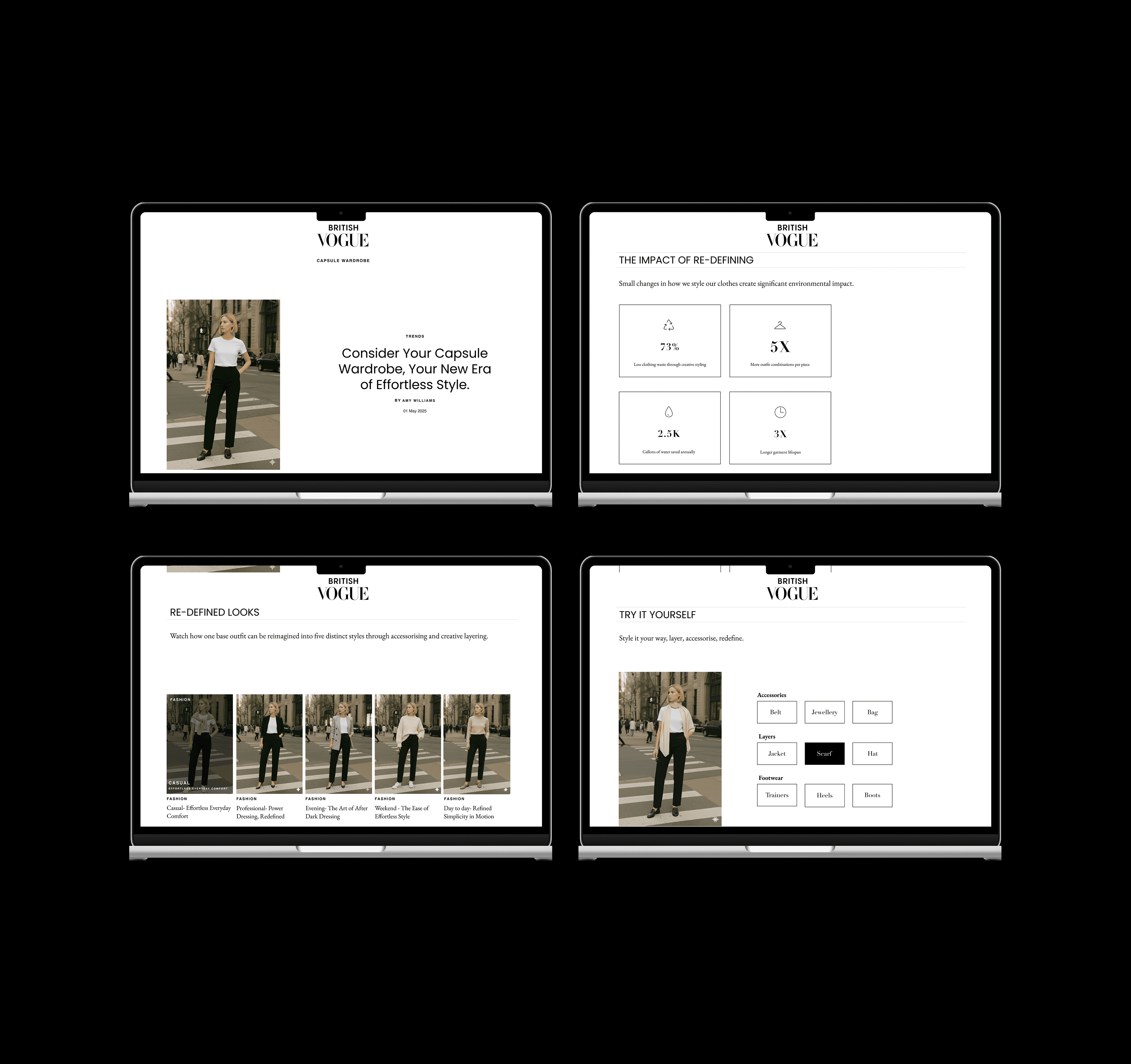
My aim was to create a microsite that inspires users to reuse clothing items for different occasions, encouraging them to make more of what they already own. The site also includes factual information to highlight the positive environmental impact of reusing clothes. I chose to design for a high end platform like Vogue to reach more people and show that sustainable, circular fashion is not a compromise, but a sophisticated and essential choice within the high fashion industry.
I started by mind mapping ideas, developing a concept, and researching both factual and visual information. From there, I moved on to sketching and creating low fidelity wireframes. I then developed mid fidelity designs, experimenting and user testing them along the way. Finally, I created a fully interactive prototype in Figma.
Ideation & Iteration
I always start by highlighting and annotating the brief, gathering key notes to fully understand the task. From this, I created a mind map to explore and generate a range of ideas. I then developed a strong concept from these ideas, ready to move into the research stage.
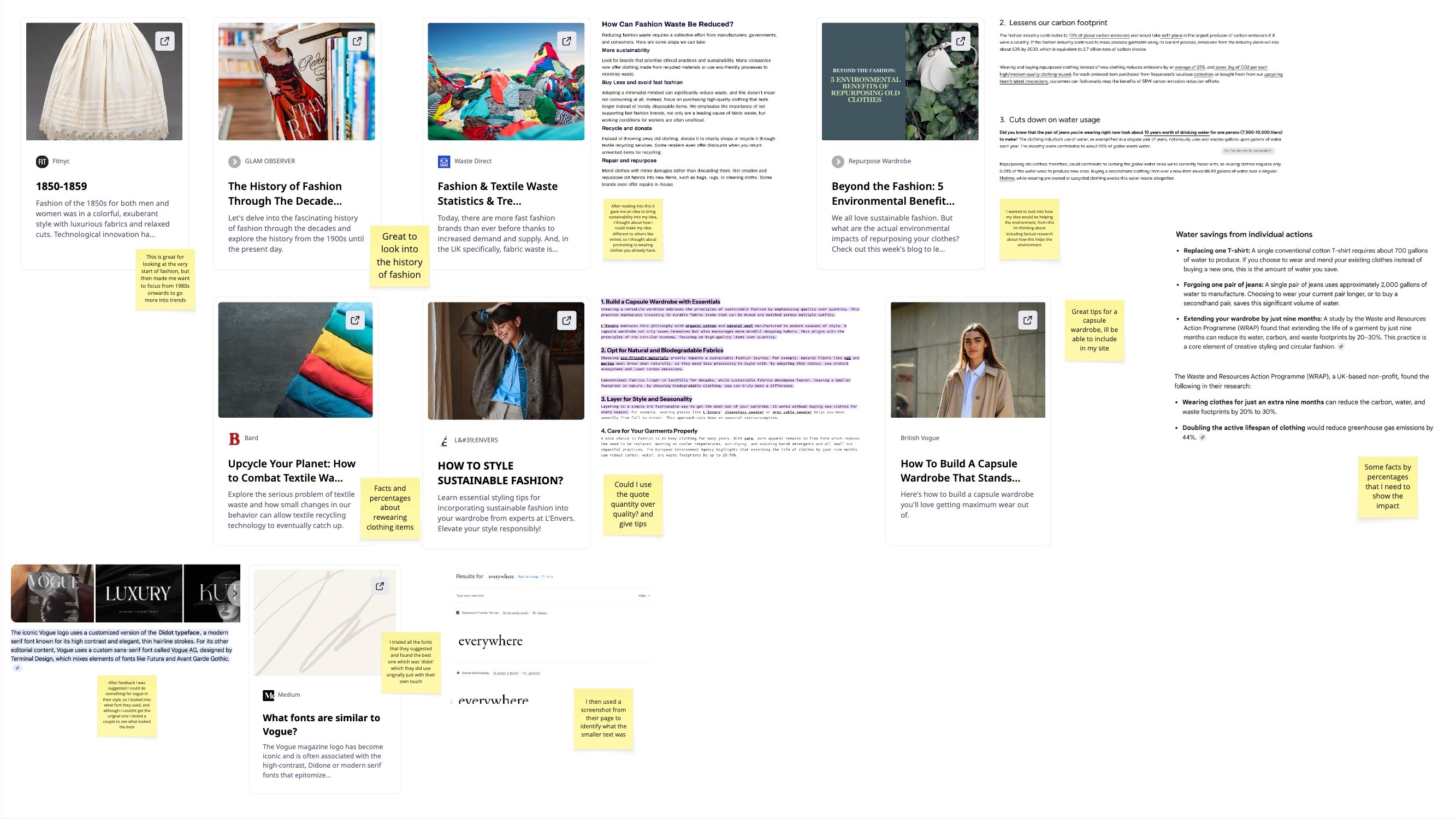
I started by researching the history of fashion, along with relevant statistics and facts around sustainability and clothing waste. This helped me build a strong understanding of the context and importance of the topic. I also carried out visual research into Vogue, analysing their tone of voice and exploring fonts on Figma that closely match their style. Combining this research gave me a well rounded understanding to inform my design decisions
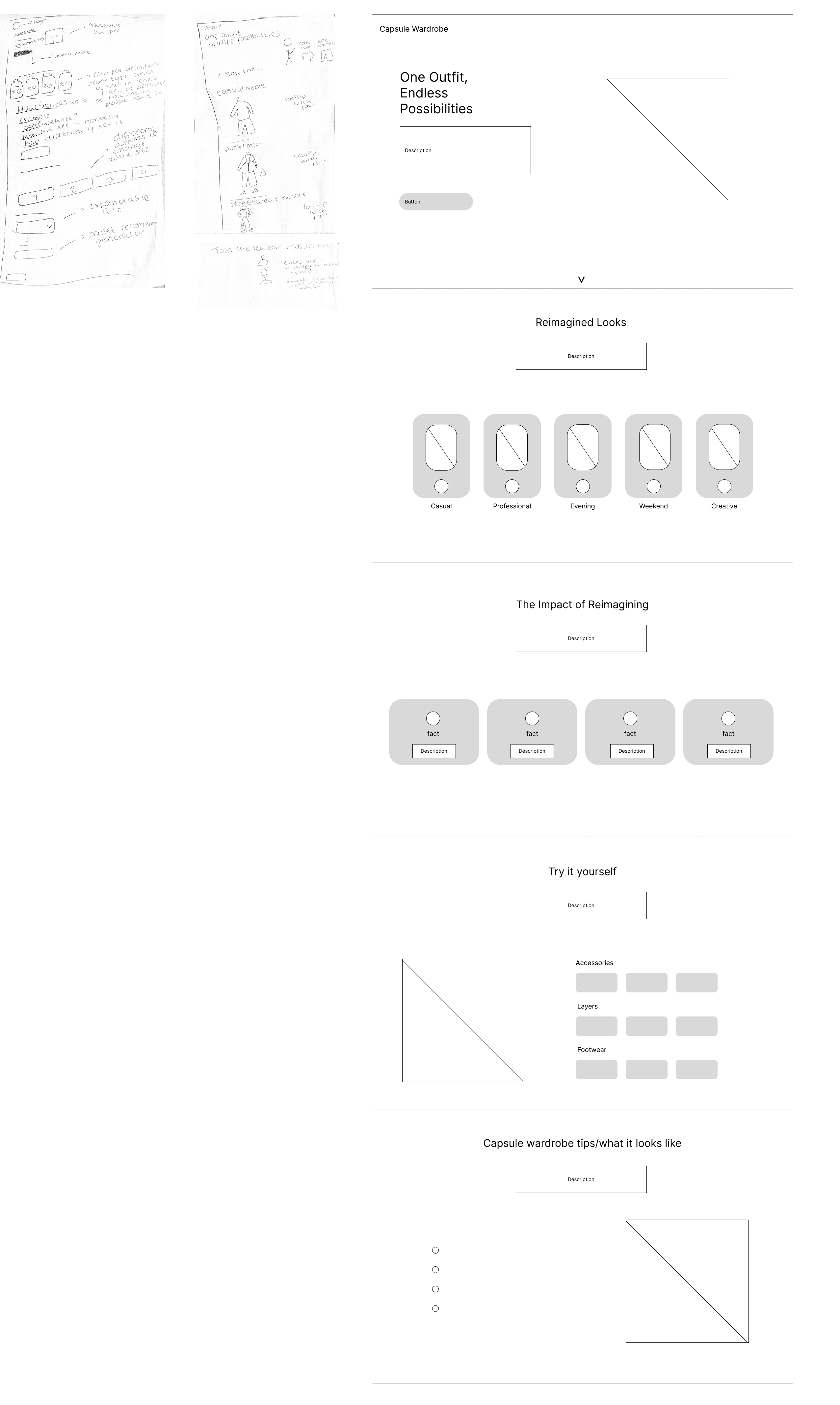
I then began sketching my ideas to explore different layouts and concepts. This allowed me to quickly visualise possible directions and how it could look. At this stage, I focused on structure and layout, helping me build a clear foundation for the design.
I explored various colours, layouts, and images while conducting user testing to gather feedback. I applied this feedback to refine my work, addressing areas for improvement while also listening to the positive feedback. I made my own website with the features but I then wanted to bring Vogues style into it. My aim was to create a design inspired by Vogue, while maintaining a distinctive, personal style and adding my own features.
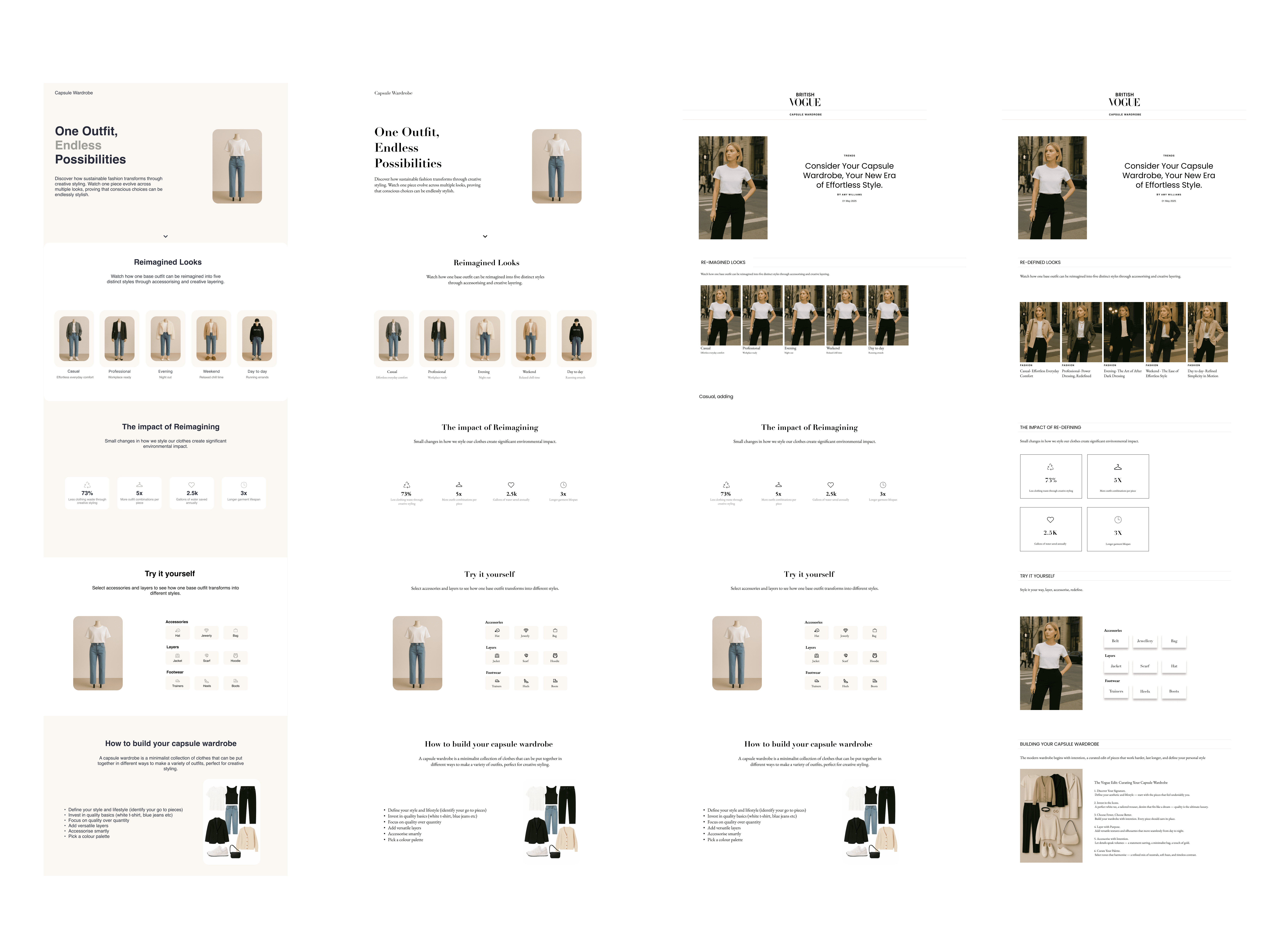
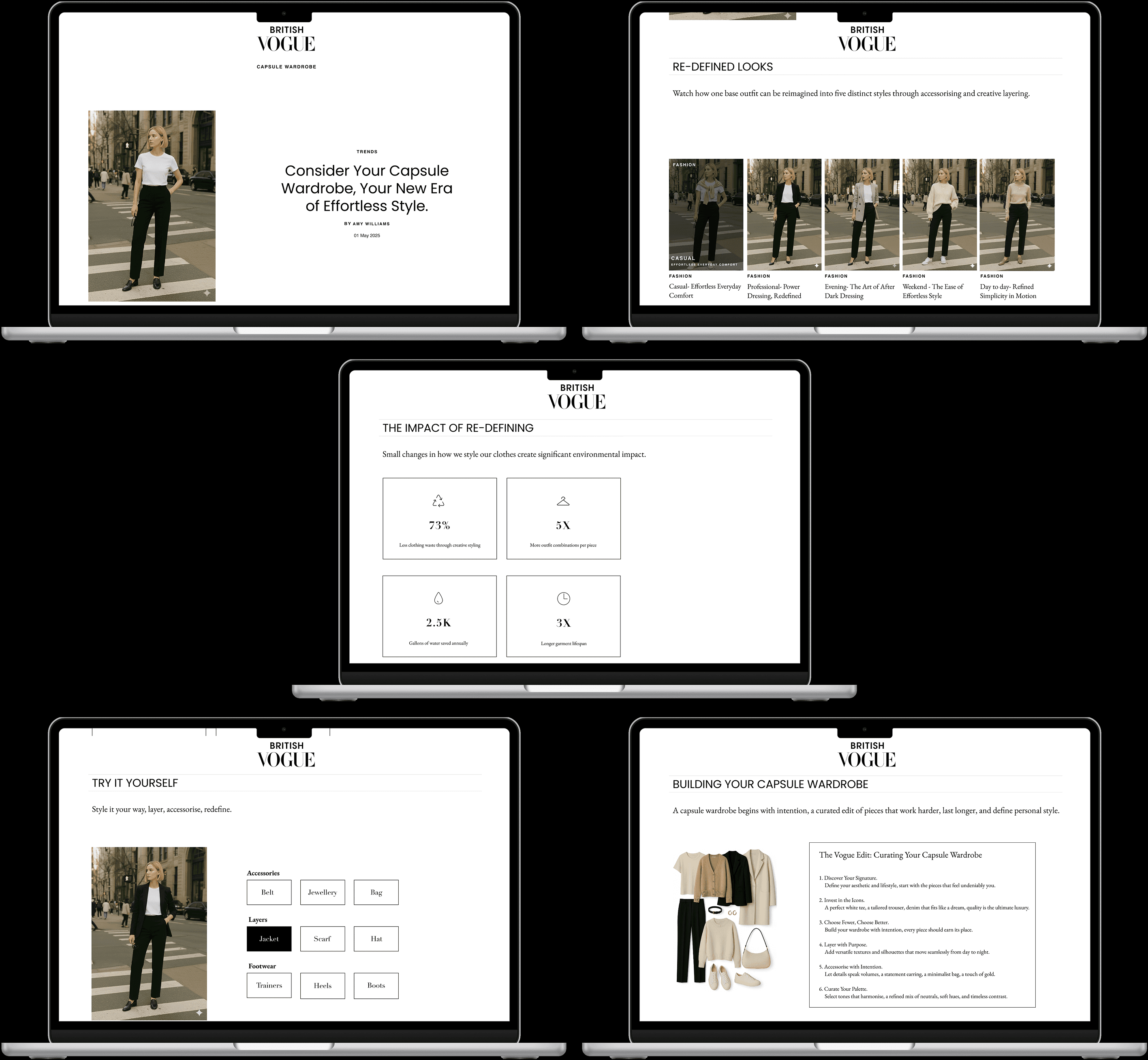
When my users were happy with the result of the UI, I began creating components and prototyping, building the project fully in Figma. I added features such as hover effects to give it a refined, Vogue inspired feel, while maintaining a similar layout. I also incorporated encouraging facts and an interactive 'Try It Yourself' feature, allowing users to visualise how a single outfit could be styled in nine different ways.
View Prototype